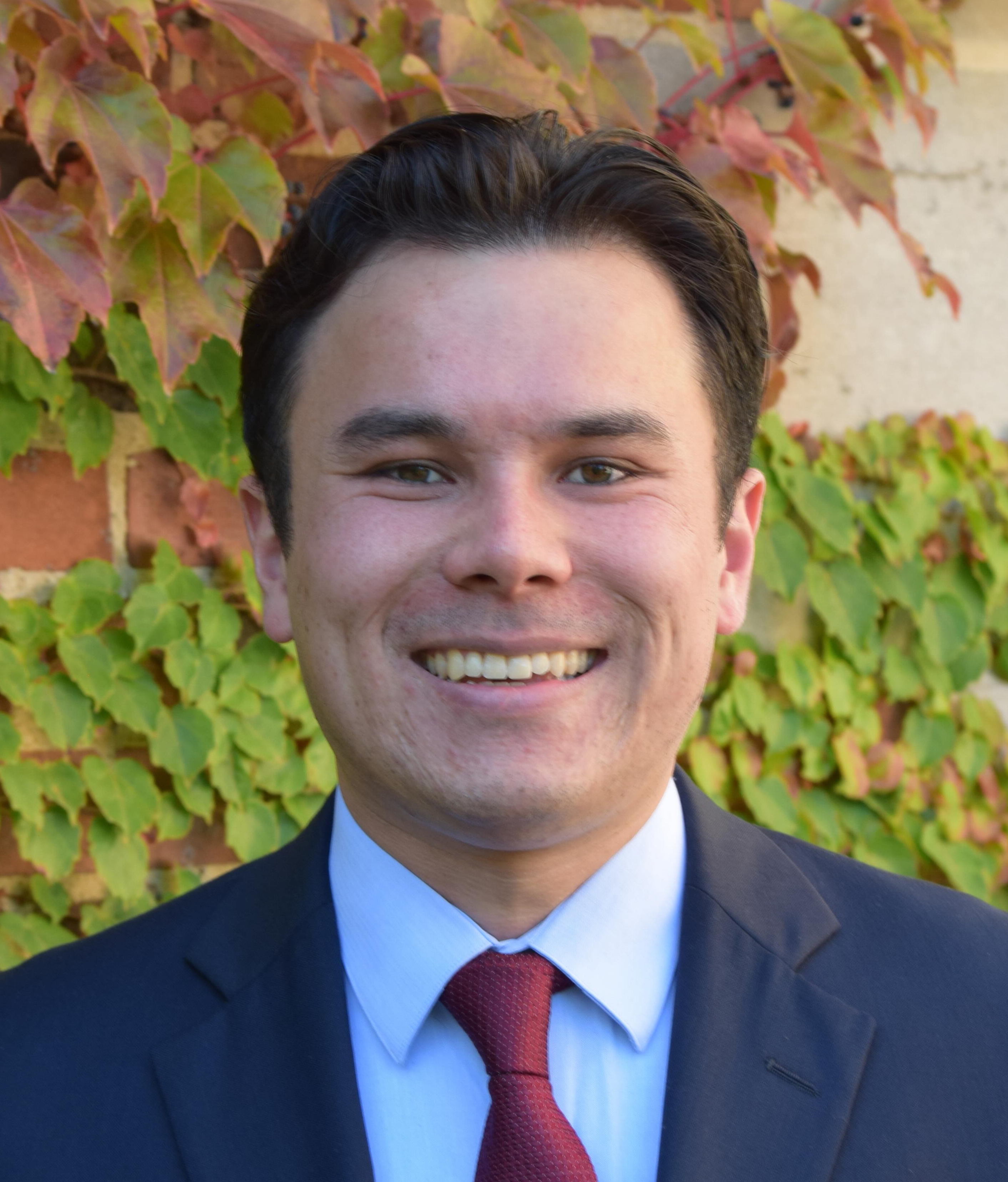
I am a Ph.D. candidate in Economics at the University of Chicago.
My research interests are in public and health economics.
I am on the 2025-2026 academic job market.
You can find my CV here.
Abstract: Despite potential health benefits of prescription drugs, many patients do not take them as prescribed. While prior work has emphasized the role of prices and insurers in patients' drug consumption decisions, this paper provides novel evidence on a non-price driver of drug consumption: pharmacies. Using a staggered event study design, I find that pharmacy closures cause Medicare patients' drug use to decline in the short-run—especially among low-income patients—but increase in the long run. To explain the long-run increase in drug consumption following a pharmacy closure, I model three potential mechanisms driving the reduced-form effect: temporary disruption/switching frictions, permanent changes in patient costs (e.g., copays or travel distance), and permanent shifts to higher- or lower-dispensing pharmacies. To quantify the relative impacts of these mechanisms, I estimate a two-way fixed effects model in the style of Abowd, Kramarz, and Margolis (1999) of pharmacies' effects on low-income patients' drug use. Combining the pharmacy effects from the AKM model with my reduced-form closure analyses, I find that the long-run increase in drug consumption following a pharmacy closure is explained by patients switching from lower-dispensing pharmacies (which are disproportionately likely to close) to higher-dispensing pharmacies. More generally, the variation in pharmacy fixed effects is about half that of prescriber fixed effects, indicating that pharmacies matter for drug consumption.
The Incidence of MediScam: Effects of Medicaid Provider Taxes (with Michelle Zheng) (slides)
Abstract: Medicaid provides health insurance to low-income Americans through separately run state programs. However, by matching a percentage of state Medicaid spending, the federal government incentivizes spending subject to the match. In response, states shift costs to the federal government by funding Medicaid reimbursement increases through taxes on hospitals and nursing homes, but these policies also increase payments providers receive for Medicaid relative to non-Medicaid patients. The impacts of these policies thus depend on whether they cause providers to change their treatment decisions, either by serving more Medicaid patients or by providing different types or amounts of care. Using the roll out of 13 state-level hospital taxes and 11 state-level nursing home taxes between 2008 and 2013, we show that these taxes increased the provision of health care to Medicaid patients. Hospital taxes increased the Medicaid share of total hospital patient-days by about two percentage points and preliminary analyses of nursing home taxes on nursing home patient-days show effects of a similar magnitude. Focusing on hospitals, the taxes increased the share qualifying as "Medicaid disproportionate share hospitals" (DSH) by five percentage points, illustrating an increased willingness to treat Medicaid patients. However, due to newly-DSH hospitals’ low rates of treating Medicaid patients in the pre-period, the overall two percent increase in the Medicaid share is largely driven by hospitals that already served Medicaid patients at high rates. Thus, while state-level provider taxes impose a fiscal externality on the federal government, they also increase the supply of Medicaid care, including by providers who previously supplied relatively little. More broadly, these results illustrate that a meaningful share of providers consider insurer reimbursements when making treatment decisions.
Do Small Copays Matter? (slides)
Abstract: Do copays matter for low-income patients, even if they are very small? I examine this question in the context of prescription drugs in Medicare. Beginning in 2012, Medicare eliminated all drug copayments for low-income patients also enrolled in Medicaid who received "home and community-based services" (HCBS). Prior to this change, these patients faced small, but typically non-zero copays averaging $1-2 per drug fill. Using Medicare patients also enrolled in Medicaid but not receiving HCBS as controls, I find that this policy reduced total copays charged to HCBS patients by $8 per month and increased drug fills by 1.5%. Per dollar of government/insurer spending, the policy impacted prescription drug consumption in this low-income population by a similar magnitude as previously studied copay changes in higher-income patient groups. Thus, even small amounts of cost-sharing meaningfully reduce low-income patients' prescription drug consumption.
Medication Use After the Patent Cliff: Who Responds and Why?
Monopoly and Monopsony Power in Meatpacking (with Camilla Schneier and Claire Palandri)
Elements of Economic Analysis II: Honors (Undergrad) TA for Prof. R. Fang. Winter 2024.
Elements of Economic Analysis I (Undergrad). TA for Prof. G. Pieters. Fall 2023.
Causal Inference (Masters). TA for Prof. M. Tartari. Fall 2023.
Empirical Topics in Social Insurance (Ph.D.). TA for Prof. M. Deshpande. Spring 2023.
Ineq. and the Social Safety Net (Undergrad). TA for Prof. M. Deshpande. Spring 2023.
Price Theory I (Ph.D.). TA for Profs. K. Murphy and C. Mulligan. Fall 2022.
You can email me at jbattles at uchicago.edu.